

All true tea comes from one plant: Camellia sinensis.
White, green, oolong, black or aged teas all begin with the same leaves. What makes them different is not the plant, but what happens after harvest.
Withering, steaming, rolling, oxidising or aging shape the character of the tea. These choices influence flavour, aroma and texture in the cup.
Tea has been cultivated for thousands of years, first in China and later across Asia. Over time, it became part of daily life in many cultures.
Today, tea is less about ceremony and more about use. It can be shared, studied, or simply enjoyed in a quiet moment.

White Tea
Flavour
Honey, melon, soft florals, fresh hay.
Character
Gentle. Light. Quiet.
White tea is made from young leaves and unopened buds. After harvest, they are simply withered and dried. No heavy shaping, no strong oxidation.
Because of this minimal processing, the tea keeps a soft, natural sweetness and a pale infusion. The texture is light, almost airy.
White tea is usually lower in caffeine than green or black teas. It suits slower moments but not necessarily.

Green Tea
Flavour
Grass, seaweed, chestnut, sweet pea.
Character
Fresh. Clean. Direct.
Green tea is heated shortly after harvest, either by steaming or pan firing. This prevents oxidation and keeps the leaves green.
The result is a tea with clarity and brightness. Depending on origin and method, it can taste vegetal, nutty, softly sweet or slightly marine.
Green tea usually contains moderate caffeine. It offers alertness without heaviness.

Matcha
Flavour
Umami, creamy, vegetal, soft sweetness.
Character
Focused. Smooth. Direct.
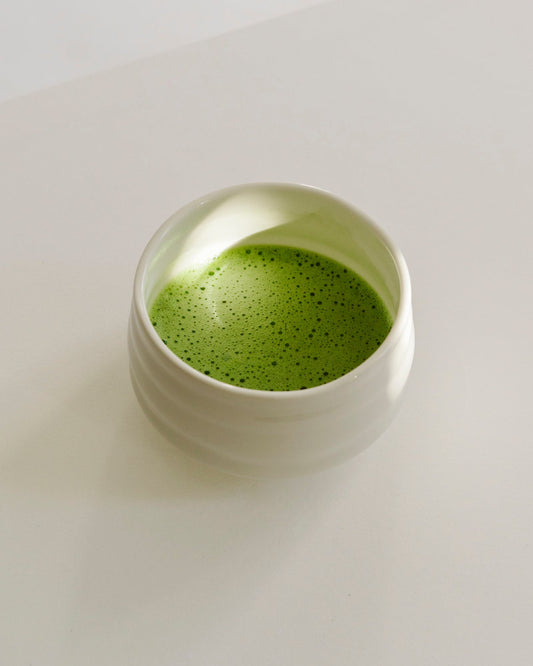
Matcha is powdered green tea made from shade grown leaves called tencha. After harvest, the leaves are steamed, dried, de veined and stone milled into a fine powder.
Unlike other teas, matcha is not infused. The powder is whisked into water, and you drink the whole leaf.
Because of this, the flavour is more concentrated. Texture matters as much as taste. A good matcha feels smooth and balanced, never heavy or sharp.
Matcha contains more caffeine than most green teas. The effect is steady rather than abrupt.
It can be prepared traditionally with water or combined with milk. What matters most is the quality of the leaf.

Oolong Tea
Flavour
Orchid, stone fruit, toasted nuts, honey, sometimes cream or roast.
Character
Layered. Rounded. Evolving.
Oolong teas are partially oxidised. This places them between green and black teas in style, but the category is wide.
Lightly oxidised oolongs can taste floral and fresh. More oxidised versions lean toward roasted, nutty or caramel notes. The shaping and roasting make a significant difference.
Oolong is well suited to multiple infusions. With each steep, the flavour can shift slightly, becoming softer or deeper.
Caffeine levels vary, but are generally moderate.

Black Tea
Flavour
Malt, caramel, dark chocolate, dried fruit, sometimes spice.
Character
Structured. Full. Direct.
Black tea is fully oxidised. During this process, the leaves darken and the flavour deepens.
Depending on origin and style, black teas can be malty and rounded, bright and brisk, or softly sweet with fruit notes. Some are bold enough for milk, others are best enjoyed plain.
Black tea generally contains more caffeine than green, white or oolong teas.

Pu'er and Dark Tea
Flavour
Earth, damp wood, leather, dried dates, sometimes smoke.
Character
Deep. Mature. Evolving.
Pu’er and other dark teas are defined by post fermentation. After processing, the leaves are aged, sometimes for years. Microbial activity during storage changes the character of the tea over time.
Raw pu’er, known as sheng, can taste brighter and more structured when young. Ripe pu’er, known as shou, is darker, smoother and more rounded.
Aging softens sharpness and deepens earthier notes. The texture becomes thicker and more grounded.
Caffeine levels vary, but the perception is often steady rather than sharp.

Herbal Tea
Flavour
Citrus, floral, spice, vanilla, sometimes tart or earthy.
Character
Gentle. Aromatic. Varied.
Herbal teas, often called tisanes, do not come from Camellia sinensis. They are infusions made from herbs, flowers, fruits or roots.
Chamomile, peppermint, rooibos, hibiscus and ginger are common examples. Each plant brings its own character to the cup.
Most herbal teas are naturally caffeine free.
Because they are not processed like traditional tea, their flavour comes directly from the plant material itself. Some are light and floral, others warming or tart.
Join a workshop and learn more about tea
-
Taste the Tea Types
Regular price €38,00 EURRegular priceUnit price per -
Matcha Matcha Workshop
Regular price €42,00 EURRegular priceUnit price per -
Clay and Tea Workshop
Regular price €85,00 EURRegular priceUnit price per -
Ton und Matcha Workshop
Regular price €75,00 EURRegular priceUnit price per -
private tea session
Regular price €198,00 EURRegular priceUnit price per